
Doing Business in Turkey
Turkish – Omani Business Council


Chairman of Turkish Chapter: Tevfik Öz
Company and Position: Tefirom Construction Energy and Industry Co. Inc., Chairman
Chairman of Counterpart Organization: Khalid Mohammed Al Zubair
Company and Position: The Zubair Corporation, Director
Counterpart Organization: Oman Chamber of Commerce & Industry
Web: http://www.chamberoman.com
Turkish-Omani Business Council was established in 2006 by the agreement signed with “Oman Chamber of Commerce & Industry” within the framework of Foreign Economic Relations Board (DEİK) of Turkey. The Business Council aims to improve trade volume between the two countries, provide mutual investment opportunities, develop the Turkish-Omani cooperation in 3rd countries and introduce Oman to the Turkish economy.
Oman’s economy depends on oil and natural gas. Oman is an important exporter of LNG in the world. However, due to the limited reserves of oil if compared to those in other Gulf and Middle East countries, Omani authorities set policies to diversify the economy and strengthen other sectors besides energy. Construction, tourism, electric energy, aviation, highways, defence, information technology, telecommunication are prominent sectors supported by the government.
The Turkish-Omani Business Council organizes annual meetings with the counterpart institution Oman Chamber of Commerce & Industry both in Oman and Turkey. During the meetings, studies evaluating the investment climate in Turkey are mainly discussed.
An example of the Turkish-Omani Business Council’s activities that gather together the state and business representatives is the Turkish-Omani Business Forum organized on occasion of the President of the Republic of Turkey H.E. Mr. Abdullah Gül’s visit to the Sultanate of Oman on April 12-14, 2010 in Muscat.
|
Official Name of Country |
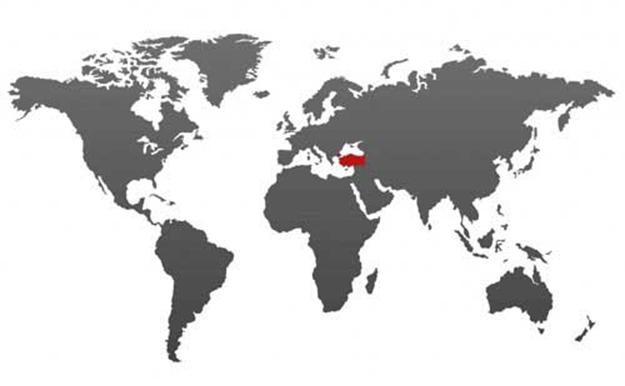
Republic of Turkey |
|
Capital City |
Ankara |
|
Government |
Parliamentary Democracy |
|
Population |
76 million (2012) |
|
Labor Force (Population) |
27.3 million (2012) |
|
Median Age |
30.1 (2012) |
|
Official Language |
Turkish |
|
President |
Abdullah Gul |
|
Prime Minister |
Recep Tayyip Erdogan |
|
Area |
783,562.38 km² |
|
Coordinates |
39° 55′ North, 32° 50′ East |
|
Time Zone |
GMT +2 |
|
Neighboring Countries |
Bulgaria, Greece, Syria, Iraq, Iran, Azerbaijan, Armenia, Georgia |
|
Major Cities (Population) |
Istanbul (13.9 million), Ankara (5.0 million), Izmir (4.0 million), Bursa (2.7 million), Adana (2.1 million) |
|
Climate |
Temperate; hot, dry summers with mild, wet winters |
|
Telephone Code |
+90 |
|
Country Code Top-Level Domain |
.tr |
|
Electricity Voltage |
220 V, 50 Hz |
|
Currency |
Turkish Lira (TRY) |
|
Financial Center |
Istanbul |
|
GDP |
USD 786 billion (2012-Current Prices) |
|
GDP Per Capita |
USD 10,504 (2012) |
|
Exports Value |
USD 153 billion (2012) |
|
Imports Value |
USD 237 billion (2012) |
|
Tourism Revenue |
USD 25.7 billion (2012) |
|
Tourist Number |
31.8 million (2012) |
|
Foreign Direct Investment |
USD 12.4 billion (2012) |
|
Number of Companies with Foreign Capital |
33,041 (2012) |
|
Inflation Rate |
6.2% (CPI-2012) |
|
Major Exports Markets |
Germany (8.6%); Iraq (7.1%); Iran (6.5%); UK (5.7%); UAE (5.4%); Russia (4.4%) (2012) |
|
Major Imports Sources |
Russia (11.3%); Germany (9.0%); China (9.0%); USA (6.0%); Italy (5.6%); Iran (5.1%) (2012) |
|
Trade Agreements |
Customs Union Agreement with the EU Free Trade Agreements with Albania, Bosnia Herzegovina, Chile, Croatia, EFTA member countries (Switzerland, Norway, Iceland and Liechtenstein), Egypt, Georgia, Israel, Jordan, South Korea, Macedonia, Montenegro, Morocco, Palestine, Serbia, Syria, Tunisia |
|
Traffic Flow |
Right |
Economic Outlook
The Turkish economy has shown remarkable performance with its steady growth over the last eight years. A sound macroeconomic strategy in combination with prudent fiscal policies and major structural reforms in effect since 2002 has integrated the Turkish economy into the globalized world, while transforming the country into one of the major recipients of FDI in its region.
The structural reforms, hastened by Turkey’s EU accession process, have paved the way for comprehensive changes in a number of areas. The main objectives of these efforts were to increase the role of the private sector in the Turkish economy, to enhance the efficiency and resiliency of the financial sector, and to place the social security system on a more solid foundation. As these reforms have strengthened the macroeconomic fundamentals of the country, the economy grew with an average annual real GDP growth rate of 5 percent over the past decade between 2002 and 2012.
Average Annual Real GDP Growth (%) 2002-2012
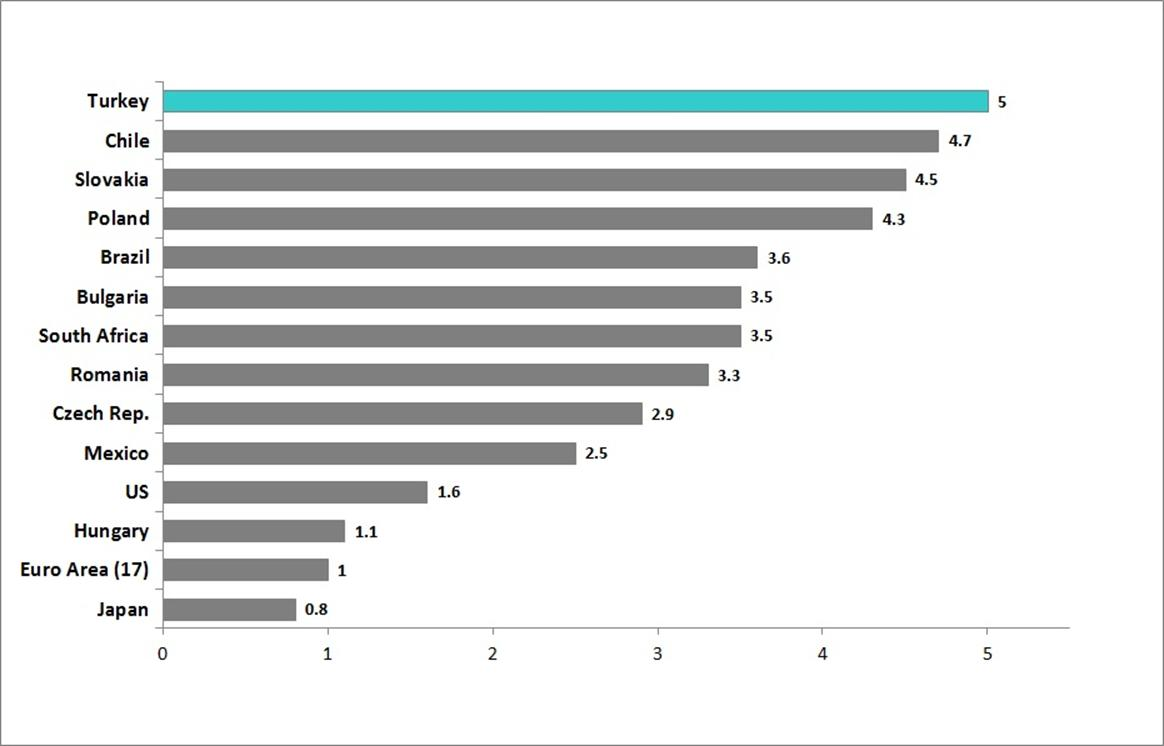
Source: OECD, Eurostat and national sources
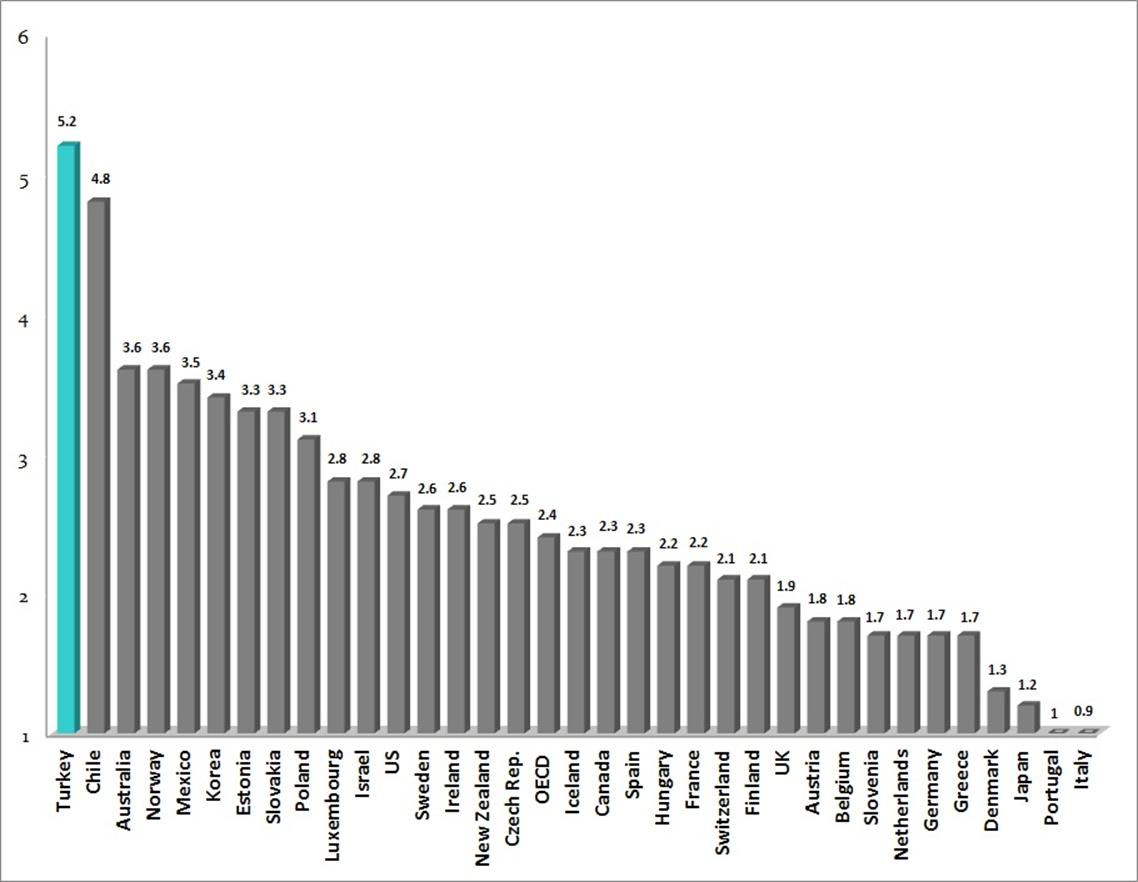
Source: OECD Economic Outlook No: 91, June 2012
Together with stable economic growth, Turkey has also reined in its public finances; the EU-defined general government nominal debt stock fell to 36.1 percent from 74 percent in a period of nine years between 2002 and 2012. Hence, Turkey has been meeting the “60 percent EU Maastricht criteria” for public debt stock since 2004. Similarly, during 2002-2012, the budget deficit decreased from more than 10 percent to less than 3 percent, which is one of the EU Maastricht criteria for the budget balance.
As the GDP levels more than tripled to USD 786 billion in 2012, up from USD 231 billion in 2002, GDP per capita soared to USD 10,504, up from USD 3,500 in the given period.
The visible improvements in the Turkish economy have also boosted foreign trade, while exports reached USD 153 billion by the end of 2012, up from USD 36 billion in 2002. Similarly, tourism revenues, which were around USD 8.5 billion in 2002, exceeded USD 25 billion in 2012.
Significant improvements in such a short period of time have registered Turkey on the world economic scale as an exceptional emerging economy, the 16th largest economy in the world and the 6th largest economy when compared with the EU countries, according to GDP figures (at PPP) in 2012.
– Institutionalized economy fueled by USD 123 billion of FDI in the past decade and 13th most attractive FDI destination in the world (2012 A.T. Kearney FDI Confidence Index).
– 16th largest economy in the world and 6th largest economy compared with EU countries in 2012 (GDP at PPP, IMF-WEO).
– Robust economic growth over the last decade with an average annual real GDP growth of 5 percent.
– GDP reached USD 786 billion in 2012, up from USD 231 billion in 2002.
– Sound economic policies with a prudent fiscal discipline.
Strong financial structure resilient to the global financial crisis.
Legal and Political Structure
Constitution
The Republic of Turkey adopted its first Constitution in 1924. It retained the basic principles of the 1921 Constitution, notably the principle of national sovereignty. As in the 1921 Constitution, the Turkish Grand National Assembly was deemed the “sole representative of the nation.” The second Constitution of the Republic of Turkey was adopted in 1961 and introduced a bicameral Parliament: the National Assembly with 450 deputies and the Senate of the Republic with 150 members elected by general ballot and 15 members elected by the President. These two assemblies constitute the Turkish Grand National Assembly. The third Constitution of the Republic of Turkey was passed in 1982 by a national referendum and is still in effect today. Under the 1982 Constitution, sovereignty is vested fully and unconditionally in the nation.
The Constitution emphasizes that the Turkish state, with its territory and nation, is an indivisible entity, and a secular, democratic, social state under the rule of law. All individuals are equal without any discrimination before the law, irrespective of language, race, skin color, gender, political orientation, philosophical creed, religion and sect, or any such considerations. The 1982 Constitution recognizes all basic human rights and freedoms such as freedom of speech, freedom of the press, freedom of residence and movement, freedom of religion and conscience, freedom of thought and opinion, freedom of expression and dissemination of thought, freedom of association, freedom of communication, the right to privacy, right to property, right to hold meetings and demonstration marches, right to legal remedies, guarantee of lawful judgment and right to acquire information.
Parliament has passed many constitutional amendments to make the 1982 Constitution more democratic and to expand democratic rights and freedoms in the country. These efforts gained significant momentum after the EU recognized Turkey as a candidate country in 1999 and later agreed to start full membership talks with Turkey in 2005.
Legislature
Legislative power is vested in the Turkish Grand National Assembly (TGNA) on behalf of the Turkish nation and this power cannot be delegated. TGNA is composed of 550 deputies, while Parliamentary elections are held every four years. Deputies represent the entire nation and before assuming office, take an oath.
The functions and powers of TGNA comprise the adoption of draft laws, and the amendment and repeal of existing laws; the supervision of the Council of Ministers (Cabinet) and the Ministers; authorization of the Council of Ministers to issue governmental decrees having the force of law on certain matters; debating and approval of the budget draft and the draft law of final accounts, making decisions on the printing of currency, the declaration of war, martial law or emergency rule; ratifying international agreements; making decisions with 3/5 of the TGNA on proclamation of amnesties and pardons in line with the Constitution.
Judiciary
Judicial power in Turkey is exercised by independent courts and high judicial organs on behalf of the Turkish nation. The judicial section of the Constitution is based on the principle of the rule of law. The judiciary is founded on the principles of the independence of the courts and the security of tenure of judges. Judges work independently; they rule on the basis of personal conviction in accordance with constitutional provisions, law and jurisprudence.
The legislative and executive organs must comply with the rulings of the courts and cannot change or delay the application of these rulings. Functionally, a tripartite judicial system was adopted by the Constitution and accordingly, it was divided into an administrative judiciary, a legal judiciary and a special judiciary.
The Constitutional Court, the Supreme Court of Appeals, the Council of State, the Supreme Military Court of Appeals, the Supreme Military Administrative Court and the Court of Jurisdictional Conflicts are the supreme courts stipulated in the judicial section of the Constitution. The Supreme Council of Judges and Public Prosecutors and the Supreme Council of Public Accounts are two additional organizations having special functions which are set out in the judicial section of the Constitution.
Executive
The executive branch in Turkey has a dual structure. It is composed of the President of the Republic and the Council of Ministers (Cabinet).
President
The President of the Republic is the head of State and represents the Republic of Turkey and the unity of the Turkish nation. The President is elected by popular vote among the Turkish Grand National Assembly members who are over 40 years of age and have completed higher education or among ordinary Turkish citizens who fulfill these requirements and are eligible to be deputies. The President’s term of office is five years and one can be elected for two terms at most.
The President of the Republic has duties and power related to the legislative, executive and judicial branches, and is responsible for ensuring the implementation of the Constitution, and the regular and harmonious functioning of the organs of state.
Prime Minister and Council of Ministers
The Council of Ministers (Cabinet) consists of the Prime Minister, designated by the President of the Republic from members of the TGNA, and various ministers nominated by the Prime Minister and appointed by the President of the Republic. Ministers can be assigned either from among the deputies or from among those who are not members of the TGNA qualified to be elected as a deputy. Ministers can be dismissed from their duties by the President upon the proposal of the Prime Minister when deemed necessary.
The fundamental duty of the Council of Ministers is to formulate and implement the internal and foreign policies of the state. The Council of Ministers is accountable to the Parliament in the execution of this duty.
10 Reasons to Invest in Turkey
1 | SUCCESSFUL ECONOMY |
2 | POPULATION |
3 | QUALIFIED AND COMPETITIVE LABOR FORCE |
4 | LIBERAL AND REFORMIST INVESTMENT CLIMATE |
5 | INFRASTRUCTURE |
6 | CENTRALLY LOCATED |
7 | ENERGY CORRIDOR AND TERMINAL OF EUROPE |
8 | LOW TAXES AND INCENTIVES |
9 | CUSTOMS UNION WITH THE EU SINCE 1996 |
10 | LARGE DOMESTIC MARKET |

http://www.invest.gov.tr/en-US/ContactUs/Pages/ContactUs.aspx
EMBASSY OF THE REPUBLIC OF TURKEY
OFFICE OF THE COMMERCIAL COUNSELOR
Location:
South Al Ghubra, Near Grand Mosque, Way No: 3709, Building No: 1129, Flat No: 1
Mailing Address:
P.O. Box. 3408, P.C. 111, Central Post Office, Muscat, Sultanate of Oman
Tel: (+968) 24 595 544/24 595 502 Fax: (+968) 24 590 055
Contact Us:
Homepage http://www.musavirlikler.gov.tr/detay.cfm?AlanID=30&dil=EN&ulke=UM
The Sultanate of Oman is forging confidently ahead towards comprehensive and sustainable development achieving remarkable growth in all areas of its economy in recent years. Oman has been encouraging market-oriented policies and private sector development as the mechanism for prosperity and growth. Oman furthermore encourages foreign capital that enhances the development of the country. There are an ever growing number of reasons and incentives to do business in Oman as such it is no wonder that it is fast becoming a most promising and attractive business market.
Why Do Business in Oman?
Current investors and businesses in Oman are enjoying a free market and a very open and healthy economy, there are a number of reasons and incentives why Oman is among the world’s most promising business destinations, including:
- Political stability
- Currency stability
- Excellent Strategic location
- Many nationals can obtain visas upon arrival
- Grand Arab Free Trade Zone
- Unified GCC Custom Tariff
- WTO membership
- Freedom to transfer capital and profit
- Customs exemption for machines, equipments and raw materials of industry
- No tax for personal income
- 12% tax rate for all businesses including branches and permanent establishments of foreign companies for foreign branches
- Guarantee for Omani origin exports against commercial and political risks.
For further reasons of why to invest in Oman please visit the ‘investment incentives’ section in the Oman Chamber of Commerce & Industry website here
Current Business Opportunities

The Public Authority for Investment Promotion and Export
Development (PAIPED) has created a list of the general sectors
where there are current investment opportunities. Such areas
include Infrastructure, Petroleum, Tourism and Information
Technology sectors to name a few. For the current list of
investment opportunities. click here.
The Oman Tender Board is an excellent place to
search for tender opportuities available, please
click here to view: http://www.tenderboard.gov.om/eng/default.aspx
Doing Business in Oman

In 2011 Ernst and Young published a report titled Doing
Business in Oman which gives an insightful overview
of the economic, commercial and tax developments.
To view the publication please
Useful Contacts & Enquiries
The Public Authority for Investment Promotion and Export Development (PAIPED) formly known as the Omani Centre for Investment Promotion and Export Development, (OCIPED) is a government institution established in 1996, that aims to promote foreign investment in Oman and develop Oman’s export capabilities.
P.O.Box 25 Wadi Kabir, Oman
Tel: (00968) 24812344
Fax: (00968) 24810890
www.ociped.com
The Oman Chamber of Commerce and Industry began operation in 1973. It was established to assist and encourage the private sector to set up and execute industrial, agricultural and commercial development projects. The chamber undertakes wide ranging activities both within Oman and internationally.
P.O. Box 1400
Postal Code 112, Ruwi
Sultanate of Oman
Tel: (00968) 24707674/84/94
Fax: (00968) 24708497 / 24704041
E-mail: occi@chamberoman.comThis e-mail address is being protected from spambots. You need JavaScript enabled to view it
www.chamberoman.com
The Ministry of National Economy is the authorized body to propose the development strategy and future trends for the national economy. It prepares the countries development plans and investment programs and is responsible to conduct studies on the regional and international trends and their impact on the national economical policy.
P.O. Box 881 Muscat, Postal Code 100
Sultanate of Oman
Tel. 968- 24698900
Fax 968 – 24698467
E-mail: mone@omantel.net.omThis e-mail address is being protected from spambots.
Oman & Turkey Business Relations
Oman is currently one of Turkey’s important trading partners among the Middle East and Gulf countries.
In order to complete the legal framework of bilateral commercial and economic relations, Turkey and Oman signed a number of agreements, including Agreement on Trade Exchange and Economic Technical, Scientific and Cultural Cooperation (2004), Bilateral Investment Promotion and Protection Agreement (2007), and Double Taxation Prevention Agreement(2006).
The Turkish-Omani Joint Committee (JC), established in accordance with the “Agreement on Trade Exchange and Economic, Technical and Scientific Cooperation between the Republic of Turkey and the Sultanate of Oman” signed on January 13, 2004.
Turkish-Oman Business Council was founded by Foreign Relations Board of Turkey (DEİK) and Oman Chambers of Commerce and Industry in 2006, in order to develop and enhance bilateral economic cooperation between both countries’ business circles.
Exports
Oman was Turkey’s 70th largest goods export market in 2012.
Turkish goods exports to Oman in 2012 were 268 million $, up 25% (214 million $) from 2011.
The top export categories (2-digit SITC) for 2012 were: iron and steel (65.9 million $); manufactured metal products (57.7 million $), petroleum, petroleum products and related materials; electrical machinery (18.2 million $), textile products (8.1 million $).
Imports
Oman was Turkey’s 106th largest supplier of goods imports in 2012.
Turkish goods imports from Oman totaled 52.8 million $ in 2012, down 6,6 % (56.5 million $) from 2011.
The top 5 imports categories (2-digit SITC) for 2012 were: plastic products (23.6 million $), organic chemicals (17.9 million $), non-ferrous metals (4.6 million $), plastics in non-primary forms (2.5 million $), leather products (1.4 million $).
Trade Balance
The trade surplus of goods with Oman was 215.7 million $ in 2012, a 36,5 % increase (158 million $) over 2011.
Contracting and Consultancy Services
Oman is a significant market for Turkish contractors. Turkish firms held and are holding 44 projects in Oman with a total value of 5.5 billion dollars up until 2013 May.
Update Date: July/2013
Office of Commercial Counsellor, Turkish Embassy in Muscat
How to do Business in Turkey ?
Content Summary: “Investors’ guide Turkey: How to do business” provides potential and existing investors with an overview of what is possible when structuring an investment in Turkey and which factors must be considered when deciding whether to acquire an existing Turkish company. The information covered is not exhaustive and unless otherwise indicated, is based on the relevant legislation and conditions existing at February 2009.
This guide, prepared by Deloitte Turkey in cooperation with the Foreign Economic Relations Board of Turkey (“DEIK”), aims to contribute to the development of Turkey’s economic, commercial, industrial and financial relations with foreign countries as well as international business organizations and communities by providing foreign investors with a concise tax and business guide to help them with their investment decisions.
Date: April 2009
Author: Deloitte / DEIK
Length: 100 pages
Format: Adobe Acrobat (*.pdf) http://www.turkey-now.org/db/Docs/How_to_Do_Business_in_Turkey_TR.pdf
For all questions Regarding “Doing Buiness in TURKEY”contact the;
EMBASSY OF THE REPUBLIC OF TURKEY
OFFICE OF THE COMMERCIAL COUNSELOR
http://www.musavirlikler.gov.tr/index.cfm?dil=EN&ulke=UM
Mailing Address:
P.O. Box. 3408, P.C. 111, Central Post Office, Muscat, Sultanate of Oman
Tel : (+968) 24 595 544 / 24 595 502
Fax: (+968) 24 590 055
Contact Us:
Homepage http://www.musavirlikler.gov.tr/detay.cfm?AlanID=30&dil=EN&ulke=UM